;%20}%20.cls-2%20{%20fill:%20%23e4e4e7;%20}%20%3c/style%3e%3clinearGradient%20id='linear-gradient'%20x1='80'%20y1='77.67'%20x2='80'%20y2='4.6'%20gradientUnits='userSpaceOnUse'%3e%3cstop%20offset='0'%20stop-color='%232962ff'/%3e%3cstop%20offset='1'%20stop-color='%235e8aff'/%3e%3c/linearGradient%3e%3c/defs%3e%3cpath%20class='cls-1'%20d='M122.39,5.7c.3-.6-.3-1.28-.98-1.06l-35.04,15-46.73,46.73c-2.26,2.26-2.64,5.05-1.51,7.54,1.06,1.88,3.01,3.77,6.03,3.77h42.81c.15,0,.25-.11.3-.23'/%3e%3cpath%20class='cls-2'%20d='M43.41,85.28c-6.03,0-10.55-3.77-12.81-9.04-2.26-5.28-.75-11.3,3.01-15.07l35.87-35.87c.45-.45.15-1.28-.53-1.28h-30.45c-.15,0-.3.08-.3.23L4,94.02c-.23.53.15,1.06.68,1.06h66.09c.15,0,.23-.08.3-.23l4.22-8.52c.23-.53-.15-1.06-.68-1.06,0,0-31.2,0-31.2,0Z'/%3e%3cg%3e%3cpath%20class='cls-2'%20d='M171.5,44.17h-12.1c0-9-5.1-13.6-14.3-13.6-7.7,0-12.5,3.7-12.5,9.5,0,6.5,4.9,8.5,16.3,11.3,13.4,3.3,24.6,6.8,24.6,21.8,0,13.2-10.6,21.8-26.6,21.8-17.2,0-27.7-8.7-27.7-25h12.3c0,10.2,5.6,15.1,15.5,15.1,8.9,0,14.1-4.1,14.1-10.8,0-7.2-5.2-8.8-16.1-11.5-13.5-3.4-24.7-6.7-24.7-21.6,0-12.1,9.9-20.4,25-20.4,17.3,0,26.2,8.1,26.2,23.4Z'/%3e%3cpath%20class='cls-2'%20d='M208.6,84.28v8.9c-1.7.5-4.3.9-6.4.9-10.7,0-15.4-4.5-15.4-15.6v-27.1h-8.5v-8.7h8.5v-12.7h11.4v12.7h9.9v8.7h-9.9v25.4c0,5.7,1.9,8,6.9,8,1.3,0,2.7-.2,3.5-.5Z'/%3e%3cpath%20class='cls-2'%20d='M263.2,68.08c0,16.5-9.6,26.9-25,26.9s-25.1-10.4-25.1-26.9,9.7-26.9,25.1-26.9,25,10.4,25,26.9ZM225.1,68.08c0,11,5,17.9,13.1,17.9s13.1-6.9,13.1-17.9-5-17.9-13.1-17.9-13.1,6.9-13.1,17.9Z'/%3e%3cpath%20class='cls-2'%20d='M320.2,61.08h-11.9c-.5-6.6-4.8-10.9-11-10.9-8,0-12.7,6.8-12.7,17.9s4.7,17.9,12.7,17.9c6.2,0,10.4-4.9,10.9-11.8h12c-1,12.3-9.8,20.8-22.9,20.8-15,0-24.7-10.4-24.7-26.9s9.7-26.9,24.7-26.9c13,0,21.9,8.3,22.9,19.9Z'/%3e%3cpath%20class='cls-2'%20d='M363.1,93.48l-19.8-24.6h-.2v24.6h-11.4V22.27h11.4v41.2h.2l18.5-20.8h13.3l-21,23.2,23.4,27.6h-14.4Z'/%3e%3c/g%3e%3cg%3e%3cpath%20class='cls-2'%20d='M433.3,83.08v10.4h-47V22.27h12v60.8h35Z'/%3e%3cpath%20class='cls-2'%20d='M476.4,78.18h11.7c-1.9,9.1-10.1,16.8-23.4,16.8-15.5,0-24.6-11.1-24.6-27.5,0-15,9-26.3,24.4-26.3,11.6,0,20,6.7,22.8,17.3,1,3.2,1.4,7,1.4,11.9h-37.3c.4,11.5,6.2,16.2,13.3,16.2,6.5,0,10.7-3.5,11.7-8.4ZM451.6,62.88h25.7c-.8-8.9-6-13.3-12.8-13.3s-11.9,4.5-12.9,13.3Z'/%3e%3cpath%20class='cls-2'%20d='M547.5,62.38v31.1h-11.4v-30.1c0-9.1-3.9-12.7-10.3-12.7s-11.6,4.9-11.6,14.6v28.2h-11.4v-50.8h10.8v6.6h.2c3.2-4.6,8.5-7.8,15.2-7.8,11.5,0,18.5,7,18.5,20.9Z'/%3e%3cpath%20class='cls-2'%20d='M602.2,58.48h-11c0-6.1-3.6-9-9.7-9-5.3,0-8.4,2.3-8.4,6,0,4.4,3.5,5.3,11.5,7.3,9.3,2.4,19.2,4.6,19.2,16.7,0,9.2-8.2,15.5-21.3,15.5s-21.9-6.1-22-18.2h11.6c0,6.2,3.8,9.7,10.6,9.7,5.8,0,9.2-2.5,9.2-6.3,0-5.2-4-6.2-12.8-8.4-8.5-2.1-17.4-4-17.4-15.4,0-9,8-15.2,19.9-15.2,12.9,0,20.5,6,20.6,17.3Z'/%3e%3c/g%3e%3c/svg%3e)
Sibanye Stillwater (SBSW): Strike Risks Montana Capital Unless Labor Costs Fall
By StockLens
September 3, 2026
4 min read
A synthesis of StockLens's multi-domain algorithmic analysis.
79
Sibanye Stillwater Limited
Source as of September 3, 2026
Core Tension
Current Ratio: Mitigated: Strong liquidity: Operating Cash Flow to Current Liabilities > 0.4
Interest Coverage: Mitigated: Strong cash interest service: operating cash flow covers interest expense more than an adjustment with positive free cash flow
Altman Z-Score: No rule defined for this metric
Piotroski F-Score: No rule defined for this metric
Domain Read
Strengths
Constructive enough to anchor part of the thesis.
Constructive enough to anchor part of the thesis.
Challenges
Keeps the thesis from reading as one-directional.
Keeps the thesis from reading as one-directional.
Uncertainty
Sentiment carries lower confidence than the headline read.
Key Takeaways
- Sibanye has explicitly conditioned future Montana capital allocation on labor agreements that secure mechanization, modernized work practices, and lower unit costs.
- Substantial group cash generation and low financial leverage provide near-term operational insulation, but they do not resolve the U.S. PGM segment's underlying cash drain.
- The decisive test for asset continuation is whether a ratified contract delivers verifiable unit-cost compression and restores positive segment cash flow.
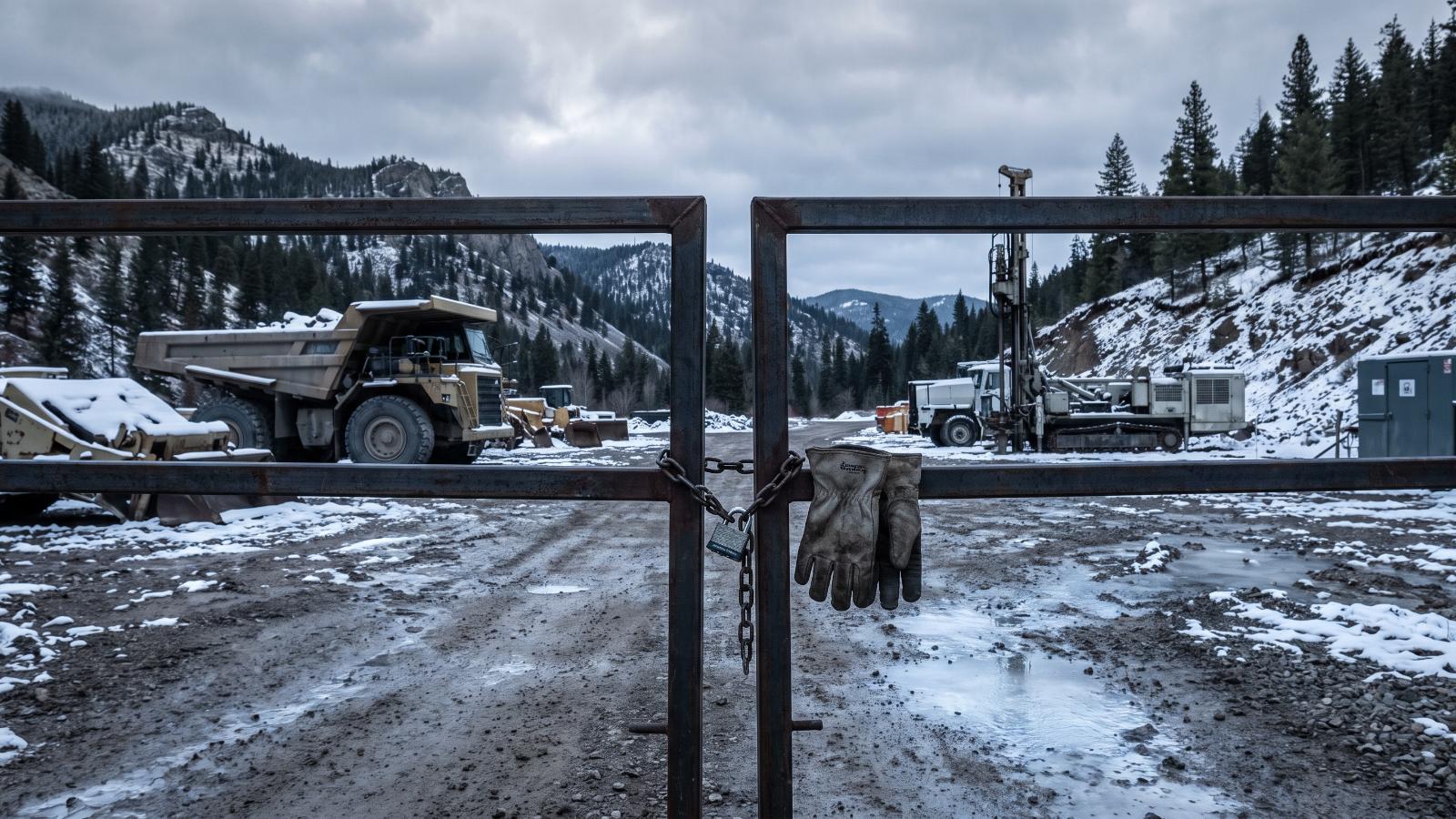
The September 3 strike at Sibanye Stillwater's Stillwater East mine and Columbus metallurgical and recycling facility in Montana has escalated unresolved mechanization, team-based productivity, and unit-cost requirements into an active labor dispute. This walkout converts operational friction directly into a capital allocation test: management has stated that structural cost reductions are required to justify future capital deployment and preserve the operational viability of its U.S. platinum-group-metals business.
Per StockLens's model, as of September 3, 2026, Sibanye Stillwater (SBSW) carries a Composite score of 79, a Solid rating, and a Fundamental score of 86. This reading predates the strike's commencement and establishes the Basic Materials producer's broader financial baseline before local labor disruptions took hold.
Mechanization and Team Incentives Drive the Dispute
The work stoppage directly involves approximately 750 employees represented by the United Steelworkers across Stillwater East and the Columbus facility. East Boulder remains outside the strike under a separate collective bargaining agreement, containing the immediate geographic footprint of the action.
The operational deficit preceded the walkout. During H1 2026, Sibanye's U.S. PGM segment generated negative notional free cash flow of US$28 million despite firming realized metal prices. The strike does not create a new cash deficit; it brings an established cost-structure problem to a critical juncture.
Management's framework requires modern working arrangements, including mechanized bolting, task mining, and team-based productivity incentives. The operational objective is clear: higher volume throughput and lower unit costs. Executive leadership has explicitly linked these changes to any ongoing capital commitment, warning that operations unable to achieve commercial self-sufficiency face structural reassessment.
Group Cash Is a Buffer, Not a Montana Fix
Sibanye operates as a Cyclical Commodity enterprise, meaning group cash flows can expand sharply during commodity upswings even as isolated regional assets remain encumbered by high operating costs.
During H1 2026, group operating cash flow reached South African rand 19.61 billion. Net debt declined over the period to South African rand 9.72 billion, bringing net debt-to-adjusted EBITDA down to 0.18x, while the board declared an interim dividend of South African rand 5.7 billion.
These figures substantiate the Fundamental score of 86 and demonstrate that Sibanye maintains balance-sheet capacity to absorb near-term regional disruption.
However, balance-sheet strength does not guarantee capital subsidization. Strong group liquidity does not cure Montana's unit-cost structure, nor does group dividend capacity turn local cash flow positive. Management's capital threshold demands that local operating economics, not consolidated group solvency, justify continued funding.
How the Group Assessment Shifts by Window and Focus
Re-weighting the pre-strike domain readings holds Composite scores within a tight 78–82 range across analytical timeframes and strategic focuses. This stability indicates that the Montana dispute represents an asset-level capital allocation decision rather than an immediate destabilization of the broader corporate profile.
Show the underlying values
| Horizon | Focus | Composite Score | Grade |
|---|---|---|---|
| Short-term (2 wks) | Defensive | 78 | Bullish |
| Short-term (2 wks) | Balanced | 78 | Bullish |
| Short-term (2 wks) | Growth | 79 | Bullish |
| Medium-term (1 mo) | Defensive | 79 | Bullish |
| Medium-term (1 mo) | Balanced | 79 | Bullish |
| Medium-term (1 mo) | Growth | 79 | Bullish |
| Long-term (1 yr) | Defensive | 82 | Bullish |
| Long-term (1 yr) | Balanced | 82 | Bullish |
| Long-term (1 yr) | Growth | 82 | Bullish |
Display-safe approximation: each cell re-weights the same calibrated per-domain scores by that evidence-history/analysis-focus profile's composite weights. It re-combines published domain scores; it is not a re-run of the engine. Treat each composite as directional, not precise, and not as a personalized suitability assessment or forecast.
What Changes the View
- A ratified labor agreement that explicitly incorporates mechanized mining practices, team incentives, and verified productivity milestones.
- Reported quarterly financial disclosures demonstrating measurable unit-cost reduction and stabilizing cash generation across the U.S. PGM segment, alongside continuous operating stability at East Boulder.
- A formal corporate capital expenditure update detailing management's choice to reinvest in, pause, or curtail the affected Montana operations.
How StockLens scores: every company is scored by the same quantitative engine across five domains (Fundamental, Technical, Risk, Sentiment, Macro), combined into one composite and read through the archetype lens that fits its business model. When the engine sets a metric aside, that abstention is deliberate rigor, not missing analysis.
This is not investment advice; it is an algorithmically generated analysis produced by StockLens's quantitative and agentic AI models.
Sources
Scores and grades reflect StockLens's proprietary model, as of September 3, 2026. External facts referenced above are grounded in the following public sources.
- youtube.com
- seekingalpha.com
- tipranks.com
- stocktitan.net
- mining.com
- investing.com
- moneyweb.co.za
- mining.com.au
- miningmx.com
- sibanyestillwater.com
- benzinga.com
- marketbeat.com
- tradingview.com
- investingnews.com
- platinuminvestment.com
- kitco.com
- simplywall.st